







Welcome to the first-ever edition of Deployed.
A new series covering how startups, digital goliaths, and every business type in between implement AI to increase conversions, engagement, traffic, and revenue.
Detailed readers may recall another series I've written, a quarterly update focused specifically on the SEO playbook of large brands.
It was far better received than I ever imagined, but the cadence meant I would sometimes have to wait months to share a great insight, leaving some updates a bit too "old" to share.
I've partially fixed that problem with our regularly updated database of public company quotes on SEO (pictured below), but I'm tempted to revive it with more frequent updates.
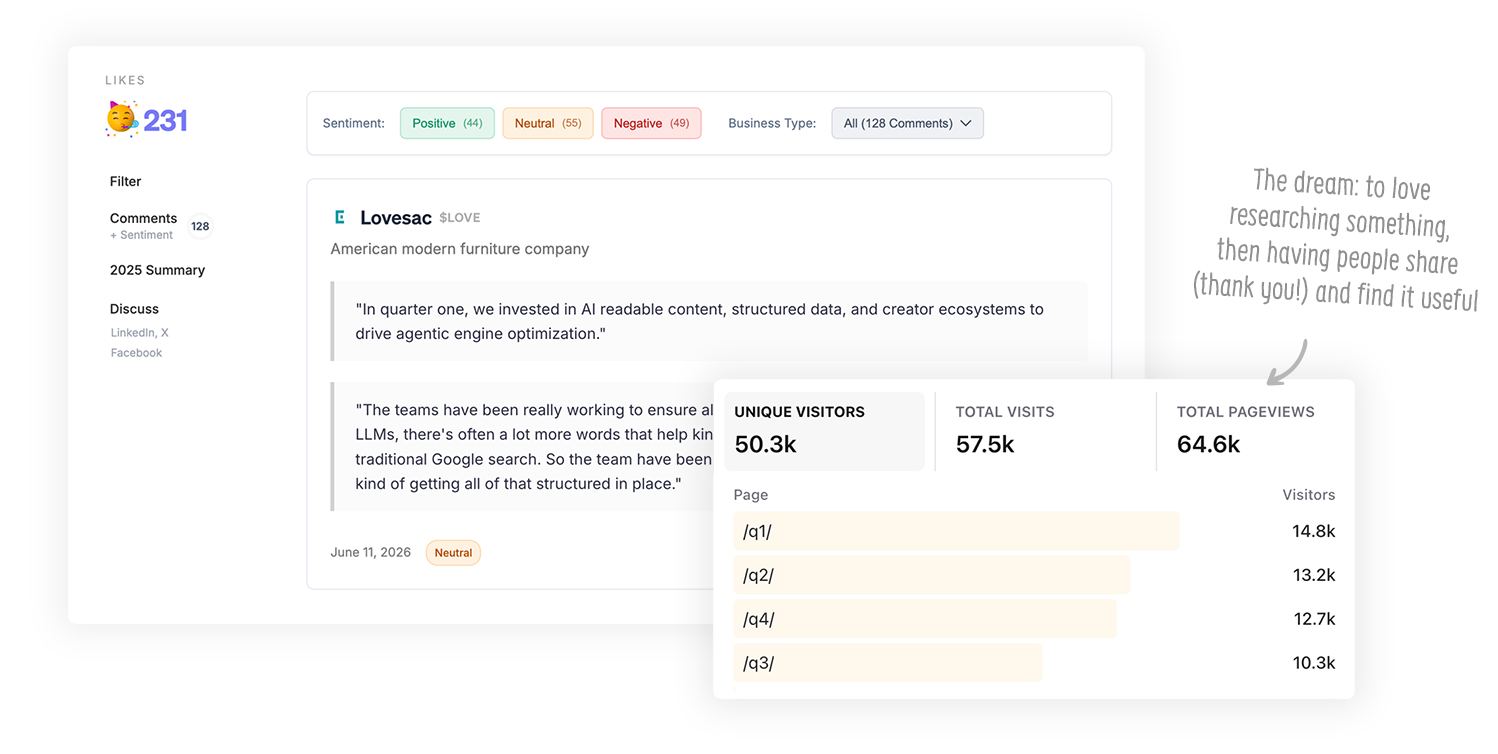
I'm as passionate about search (and AI search) as I've ever been, but I also see a ton of opportunity to use AI in marketing that simply didn't exist before.
I try to write the kind of reports I would love to read myself, and I truly hope you find this first edition valuable (because, selfishly, I would love to write more of them).
Opendoor saved $500K with a single Claude skill, but I need to be honest about what I can and can't share
There are lots of AI workflows I would love to learn more about, but there aren't any skill files I would prioritize over a specific one from Opendoor.
In May, CEO Kaz Netajan piqued my interest when he said the following,
One of our marketing managers replaced our $0.5 million life cycle legacy e-mail system with one Claude skill.
It likely has zero relevance to what I'm working on, but I can't deny I'm incredibly curious about what it contains.
I reached out to Kaz, but unfortunately didn't get a response.
(I wouldn't be surprised if he didn't even see the message so no hard feelings, of course.)
This report is human-written, but just for fun I prompted Opus 4.8 with nothing more than the above quote and background on Opendoor to muse on what the Skill file might cover:
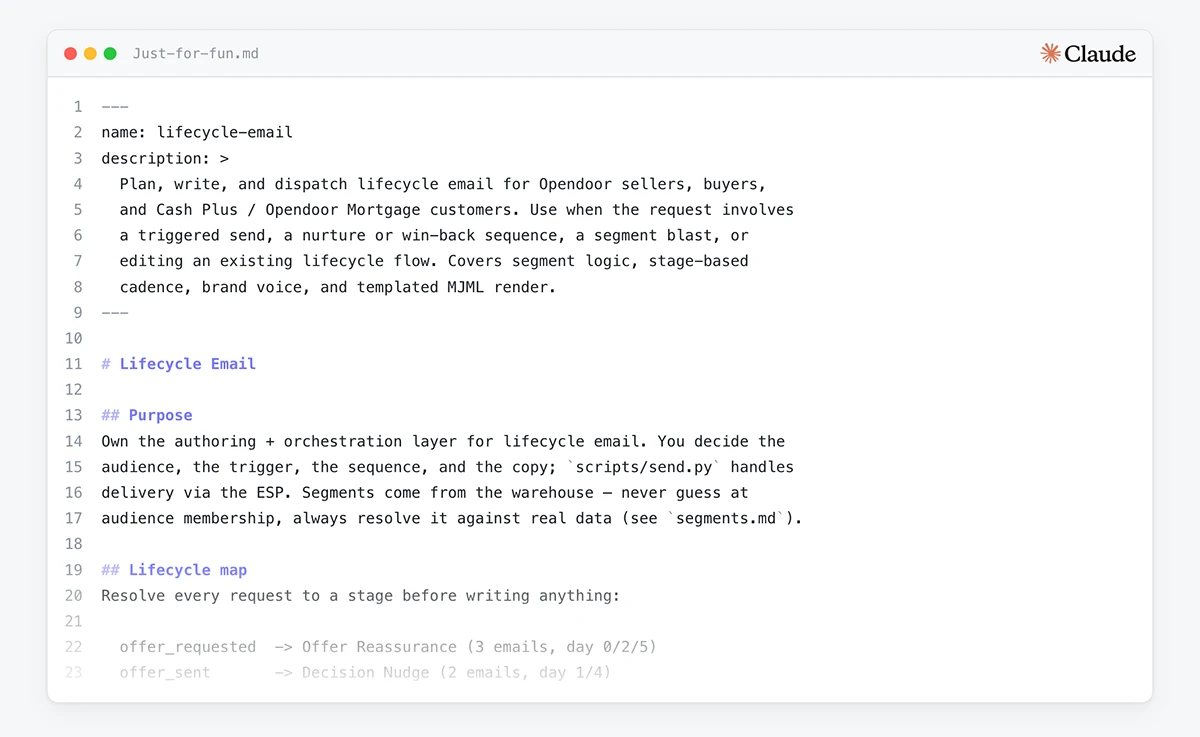
I included this example to both introduce my goal for this report and clarify what I'm unable to share.
My aim is to provide inspiration for countless projects you can build to grow your own business, but we're unlikely to get the exact mechanics behind how companies implemented their version.
For those who need them, I'm working on a free video series to show how to build these solutions, but we'll have to take our own approach.
With how accessible development is these days, I like to think most people reading this won't need my help to find value in the following ideas.
The Arena Group is using AI-powered content recommendations to add millions in revenue
As one of the "16 companies dominating Google", I've been following the progress of The Arena Group's content sites for years.
When I learned they were using AI to recommend content to readers to keep them on sites like Parade and The Street, I had to read more.

As Digiday shared, their goal for 2026 is to increase pageviews per visitor from an average of 1.1 to 2.
Their AI-powered recommendations have already increased average pageviews from 1.1 to 1.2, which at their scale equates to several million dollars in additional revenue.
Unfortunately the Digiday report didn't say exactly where these recommendations happen (I've reached out for comment), but I did notice something slightly out of the norm that you might find interesting.
Whereas on most sites recommended articles are at the end of the one you're reading, on Parade they're prominently shown in their left sidebar.
I expected some might take you to other brands in their network, but it seems the recommendations are doing a good enough job without that.
Beehiiv CEO Tyler Denk automated the workflow behind his 130,000+ reader newsletter
The CEO of newsletter platform beehiiv, which recently crossed $30M in ARR, revealed 5 AI-assisted workflows behind his personal newsletter.
The end result is that it went from taking him over 4 hours to manage each week to just a few minutes.
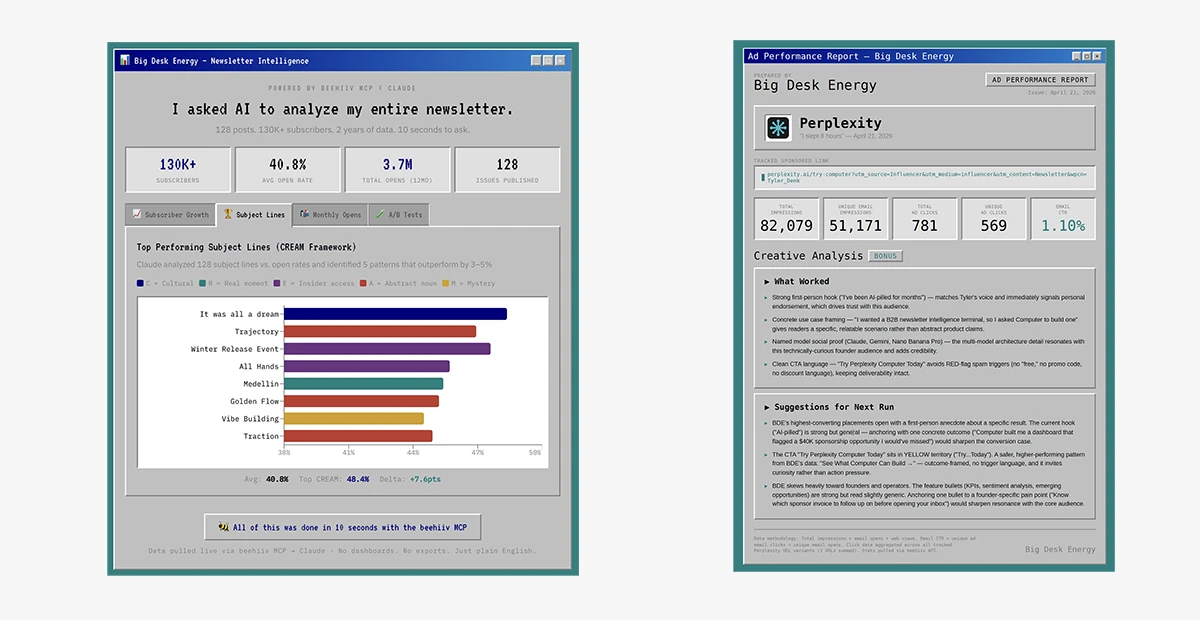
The five-step workflow is as follows:
- Claude helped build a style guide based on all past newsletters, against which all new rough drafts are checked and updated
- It creates a subject line based on the best open rates from past editions
- Ad copy is updated to match the framing that previously resulted in more ad clicks
- Claude then creates a weekly, customized performance report to send to relevant sponsors
- New subscribers are scored for whether they might be interested in advertising on the newsletter in the future
While I'm an active user of a prominent beehiiv competitor (Kit) I'm enjoying his personalized updates enough that it makes me more bullish on the product itself.
1800Flowers.com lets AI decide which products show up first, and conversions are improving
In the second quarter of 2026, gifting platform 1-800-Flowers completed the implementation of AI-powered sorting and ranking on its site.
CEO Adolfo Villagomez stressed the importance of having the right products above the fold (before a user has to scroll), as that's where most sales come from.
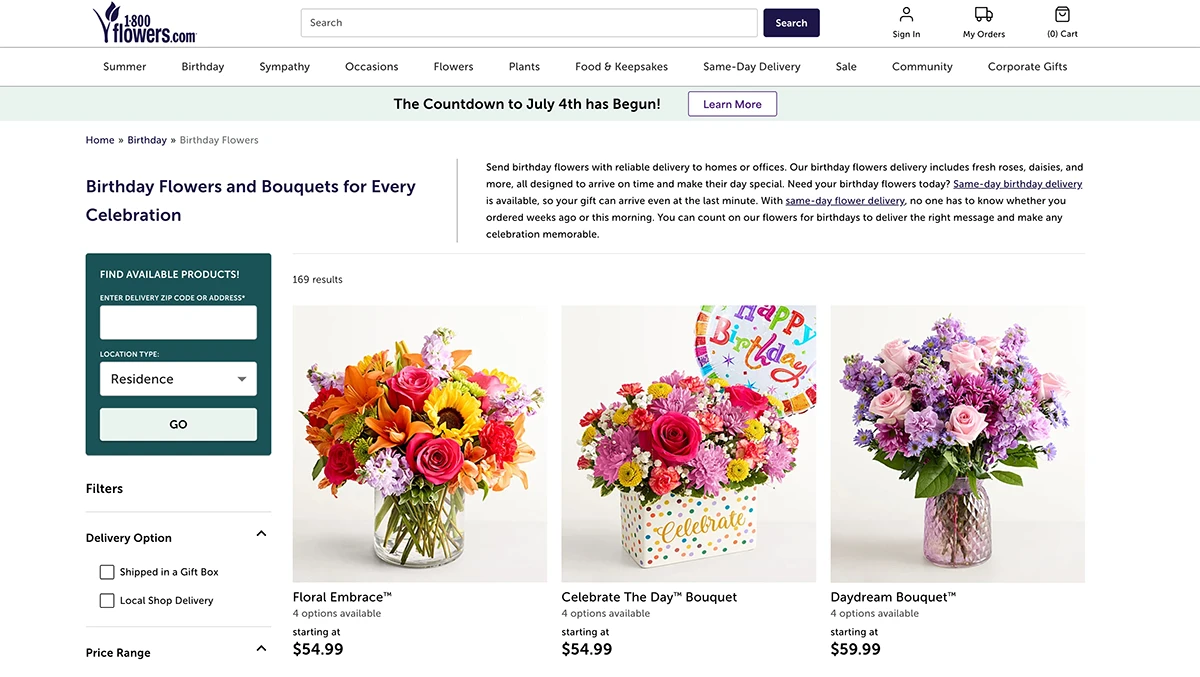
Since the move to having AI select those items, conversions are said to be improving.
He also made another comment about how AI is helping the business,
Most importantly, we are also finding out what customers really want and what they are willing to pay, not only from a type of spend, but also from delivery method and delivery fees they are willing to pay.
It sounds like they're also using AI to find the sweet spot between conversion rates and revenue per order by testing different shipping and pricing options.
Split-tests in themself aren't a new thing, but having AI make more of the decisions is an interesting approach.
As RocketSaaS hits $7M in ARR, its founder shares how he uses AI
RocketSaaS CEO Ryan James recently shared where he has both embraced and rejected AI in his business.
His agency, which helps software-as-a-service companies with their marketing, recently hit $7M in ARR.
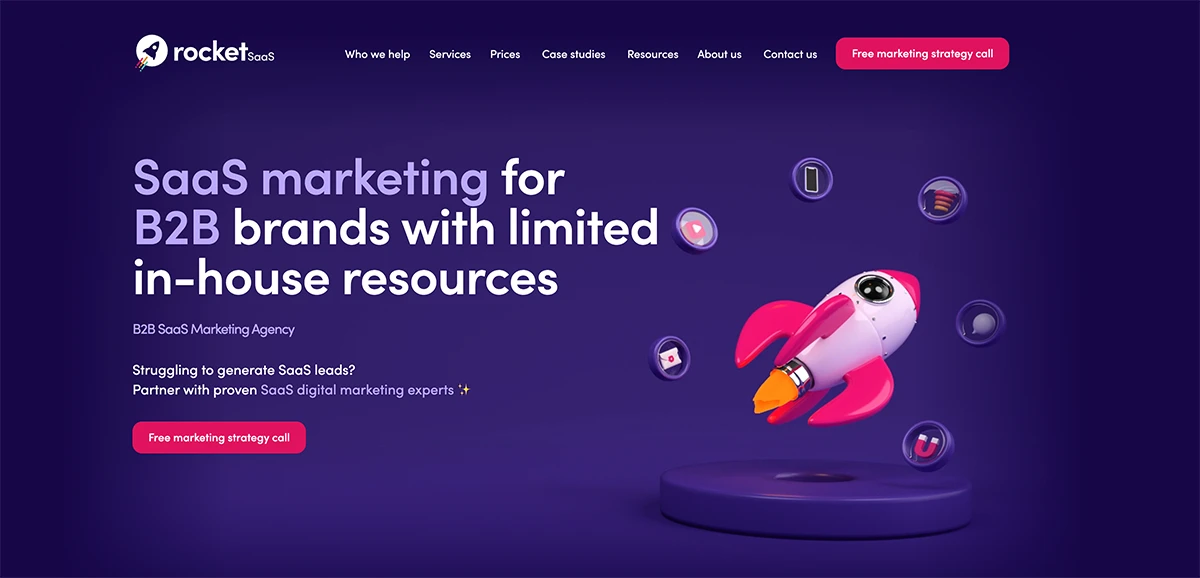
Ryan said the likes of client strategies, relationships, and briefs are all human-first.
Places he's embraced AI include:
- Market research with AI call analysis
- Scaled content repurposing
- AI analyzing ad performance
- AI data enrichment for tighter ICP
As I've previously shared on the Ahrefs blog, I like the idea of using AI to monitor calls (where allowed) and customer support tickets, then using those as inspiration for prompts to monitor your AI visibility.
It was just one of many angles I shared, but it's a great way to home in on the natural language and terminology people use in your space.
CarGurus' AI-powered search users spend 4.4x more time on their site
In their February 2026 earnings call, CarGurus CEO Jason Trevisan shared some numbers about the success of their generative AI search experience, CG Discover.
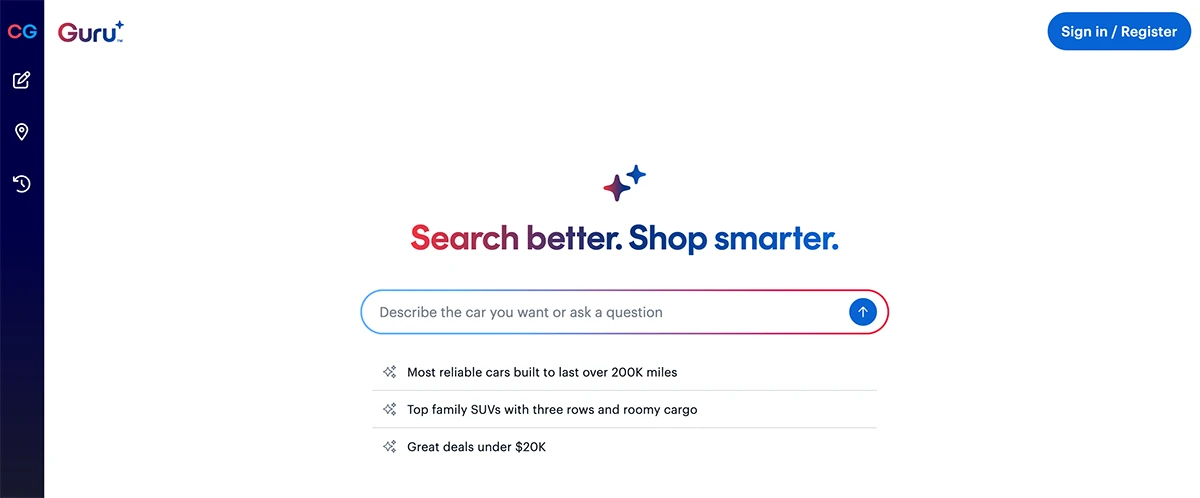
Discover was described as a "decisioning copilot" that answers consumer requests using its live marketplace inventory and automotive expertise.
As shown in the image above, customers can use natural language to navigate their marketplace, rather than predefined filters.
Trevison revealed that Discover traffic for the quarter grew 3.5x, with attributable leads growing 10x.
He also shared that Discover users spend 4.4x as much time on the site as regular visitors.
The owner of B2B SEO Agency Growth Plays shared how he uses Skills to follow client guidelines
I've been following John-Henry Scherck online for as long as I can remember.
As someone who stopped working with clients at the start of 2024, he keeps me in the loop with a new perspective on the challenges (and opportunities) agency owners face.
He recently shared that account managers at his agency, Growth Plays, use skill files and an MCP to ensure their work always adheres to client feedback.
Here's a sample of the skill file to see how it is structured:
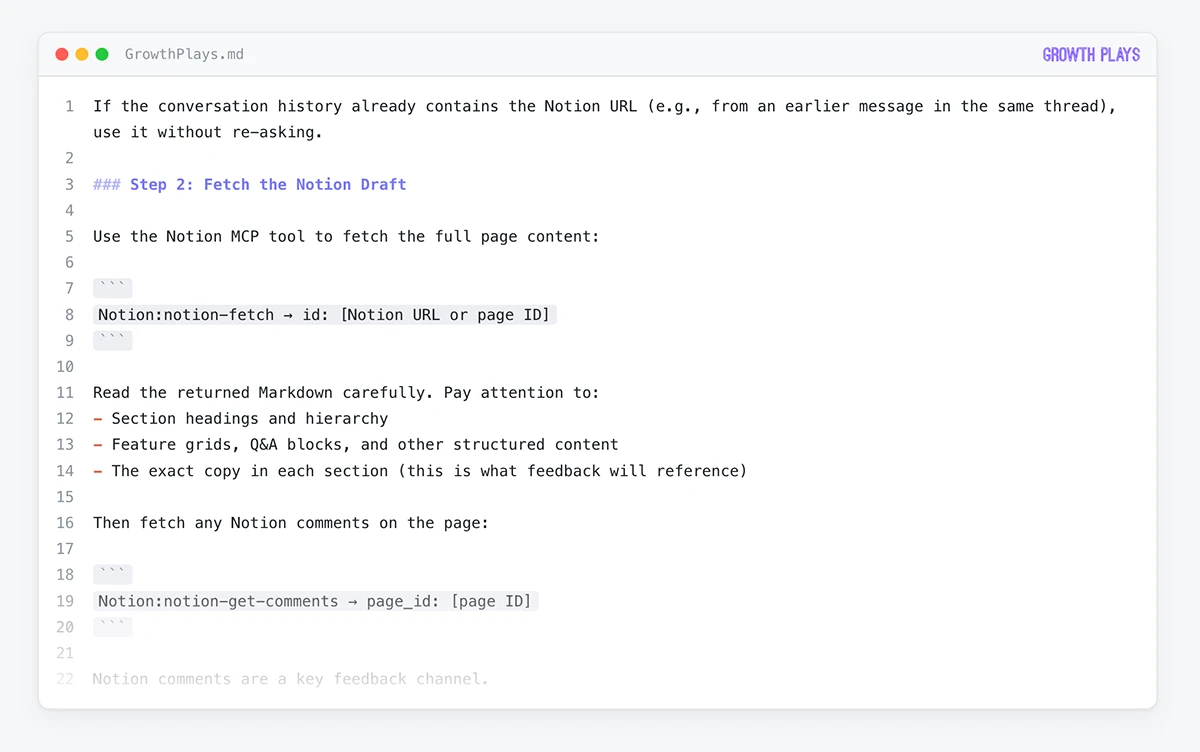
In one section, when comparing a live article vs a content draft in Notion, they look for things like sections the client removed, added content not part of their drafts, and any structural or layout changes.
It's a smart way to ensure they learn from each piece of content they put together.
Coursera's AI dubbing has already been used by 120,000 learners
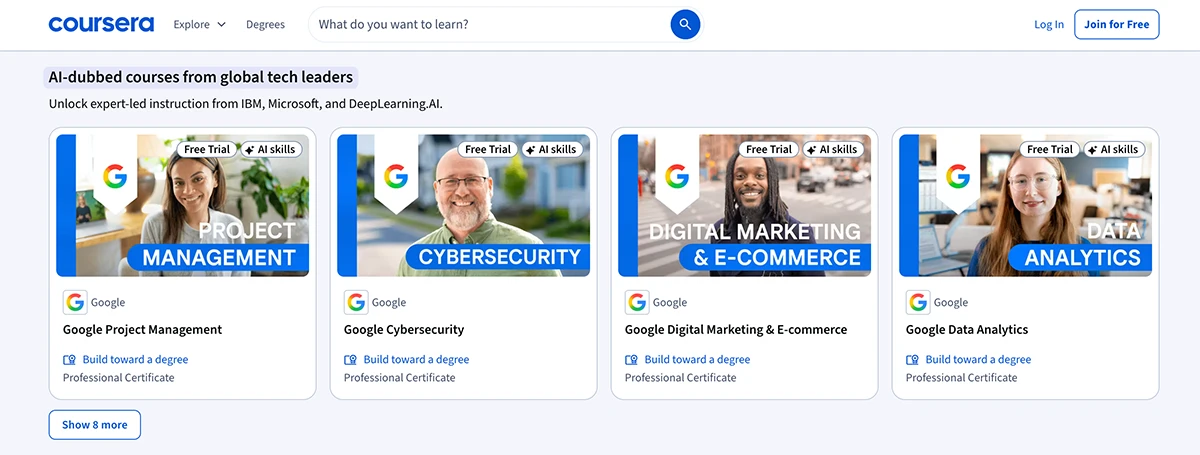
Coursera, the online learning platform, introduced AI dubbing across more than 100 courses.
If you're unfamiliar with the term, this means users see the same video, but the speaker's voice is translated into other languages.
When early stats were shared in 2025, Coursera revealed that more than 120,000 users had used the feature.
Users said it improved their focus and understanding, likely by not having to rely on subtitles or studying in a non-native language.
While I've tested translated captions in my courses before, dubbing seems worth trying on a small scale before potentially rolling it out further.
Duolingo says AI helped them increase course output by 10x in just two years
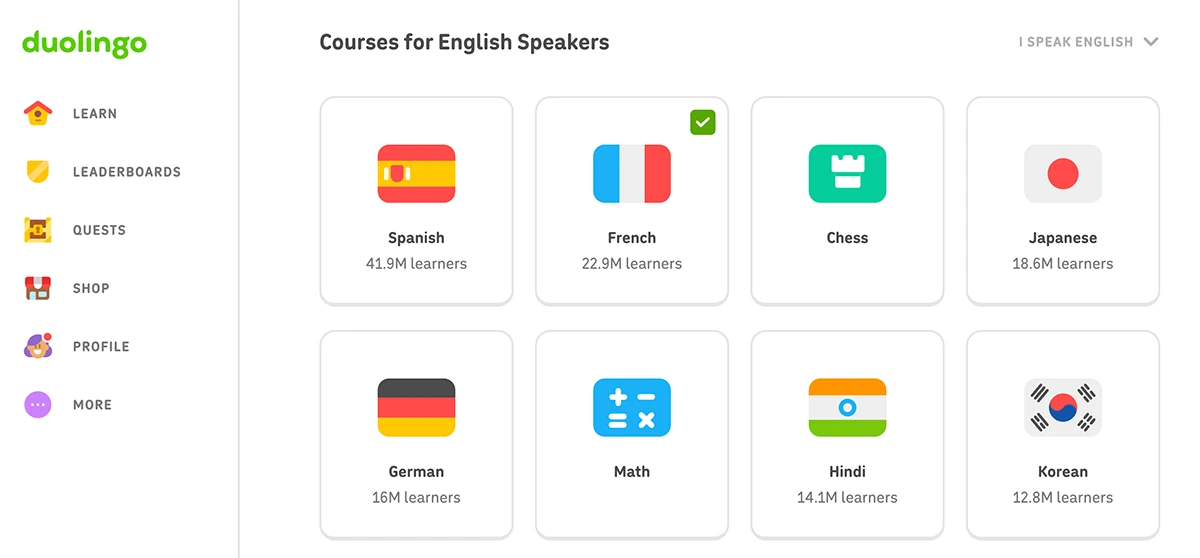
Luis von Ahn, the co-founder of the language-learning platform Duolingo, said last month that "AI has fundamentally changed what's possible for us."
And he has the numbers to back it up.
In Q1 of 2026, the company published 20,500 course units. That's 10x as many as they were publishing per quarter just two years ago.
Even with the huge growth in output, he believes Duolingo is just scratching the surface of what AI will make possible for them.
One aspect other employees noted is that AI will enable Duolingo to personalize lessons for each user, making the time spent on the platform feel much more like a private session with a tutor.
The Financial Times saw a 36% (then 290%) conversion rate increase thanks to AI personalization
Financial Times' Adriana Whiteley told Press Gazette that when they originally tested personalized paywalls, they saw conversion rates increase by 36%.
Now, after a more sophisticated comparison of the implementation, personalization showed a 290% increase in conversion rate.
The personalized messaging that users see is chosen by AI, but not written by AI.

To be transparent, it was not immediately clear where this personalization occurs. I couldn't get the messaging in the screenshot to change, so I assume it's there to get users to commit after subscribing to a $1 trial.
Whiteley made it clear that AI is part of the creation process, but humans are responsible for the content.
How I use the Ahrefs API to find content & PR opportunities on autopilot
Over the past few years I've built dozens of tools that make my marketing work both more efficient and more effective.
I plan to create a full report on those one day, but for now let me share one of my favorites: A custom dashboard that shows the overall search traffic, AI visibility, newly acquired links (and more) of the brands I want to monitor.
It's all powered by the Ahrefs API.
(Yes, I'm biased, but I've been an Ahrefs customer for 10+ years. Now API access has opened up, I'm building a lot of things with it.)
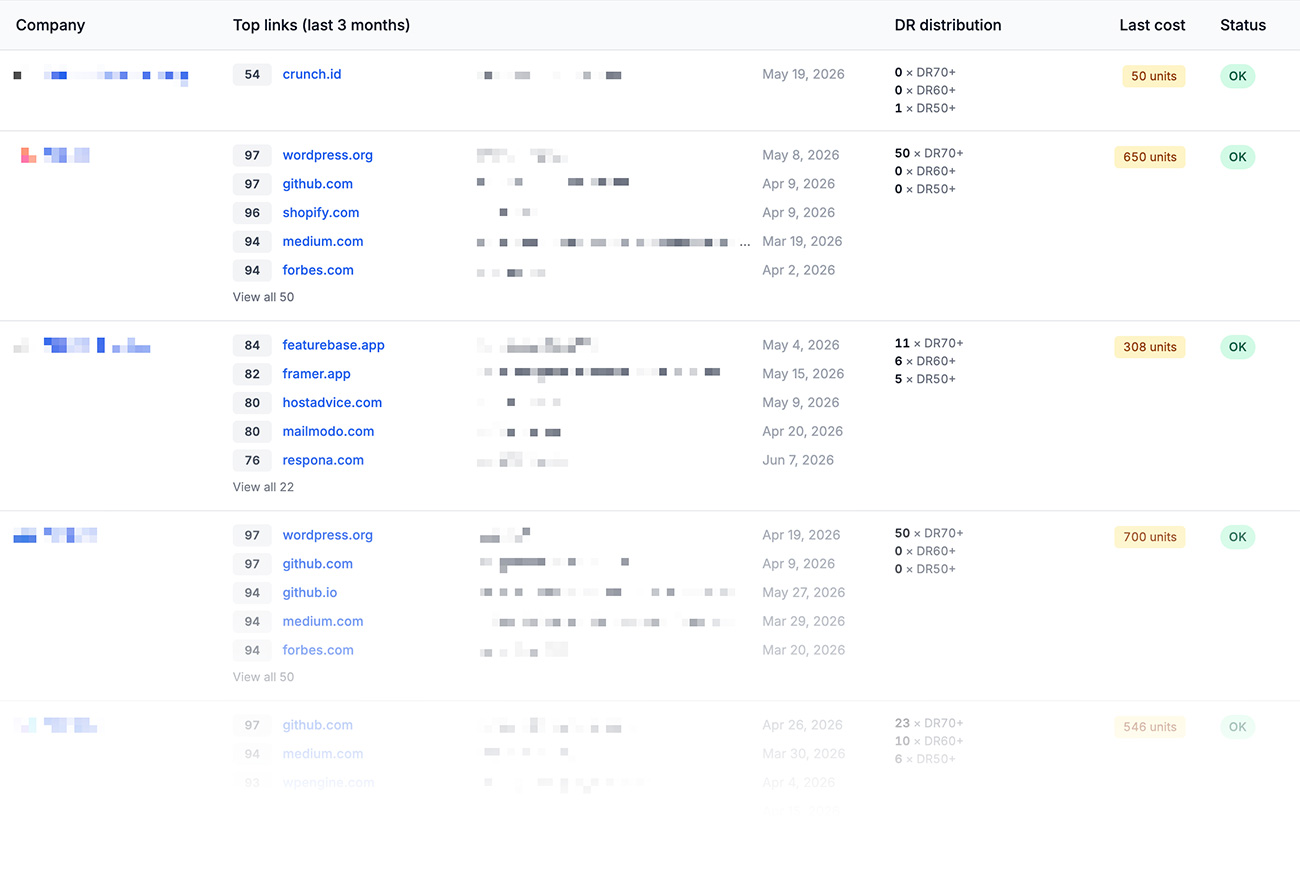
Even on an Ahrefs Lite plan, you get enough units each month to track dozens of sites in the same way (or hundreds by only focusing on specific metrics).
While I've always been fairly technical and designed and built 95% of my own websites, without AI I never would have attempted to put a dashboard like this together.
I've written a full guide to using the backlinks API for content & PR insights, which can easily be adapted to look at other stats.
In just 8 months, one Fortune journalist has written 600+ stories with the help of AI
The Wall Street Journal's Isabella Simonetti wrote a great article (note: it's behind a paywall) on the prolific writing of Fortune journalist Nick Lichtenberg.
Lichtenberg, who rejoined Fortune in July of 2025, uses both Perplexity and Google's Notebook LM to help create article drafts based on the headlines he comes up with.
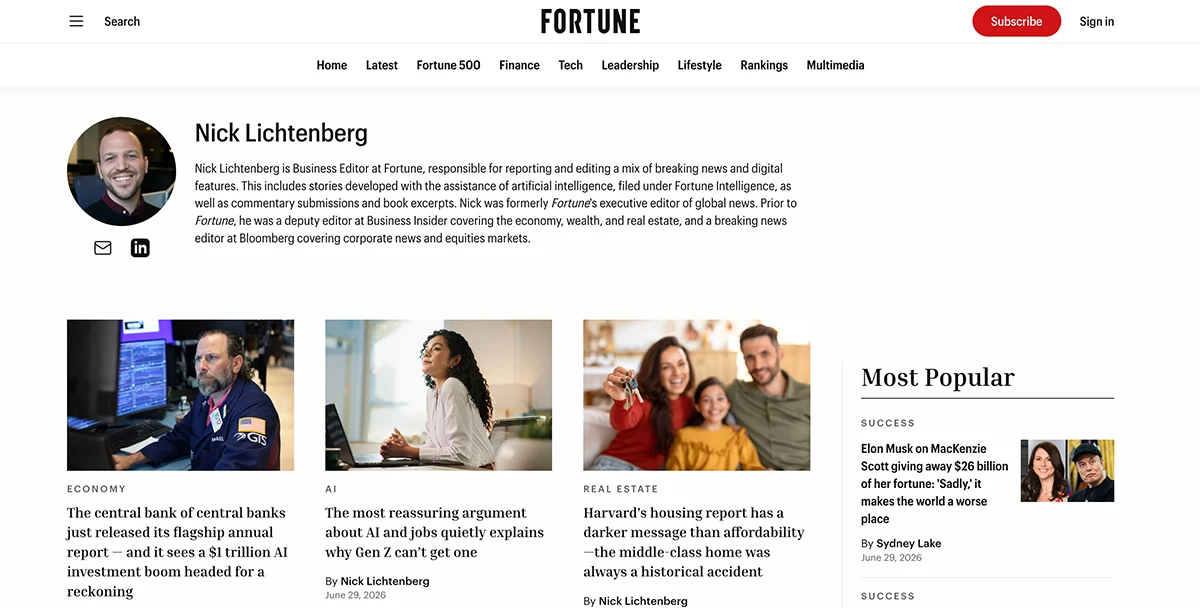
Lichtenberg then adds his own insight to the stories, such as in one example where he used a phone conversation with a Wall Street executive to make the piece his own.
It was said that he thinks of himself as an "AI alchemist", which is such a good term I had to check if the .com was available. Sadly not.
While the SEOs reading will understandably be concerned about the potential impact of such a reliance on AI, it sounds like he can add genuine value to the work, and he stated AI often helps with documents or transcripts where the facts are right there.
The New York Times uses AI to transcribe and summarize podcasts to monitor market sentiment
The New York Times' Zach Seward told Nieman Lab the publisher uses LLMs to transcribe and summarize episodes from dozens of podcasts, then compiles them into what it internally calls the "Manosphere Report".
Each morning, a summary of the previous day's commentary is emailed to nearly 40 journalists.
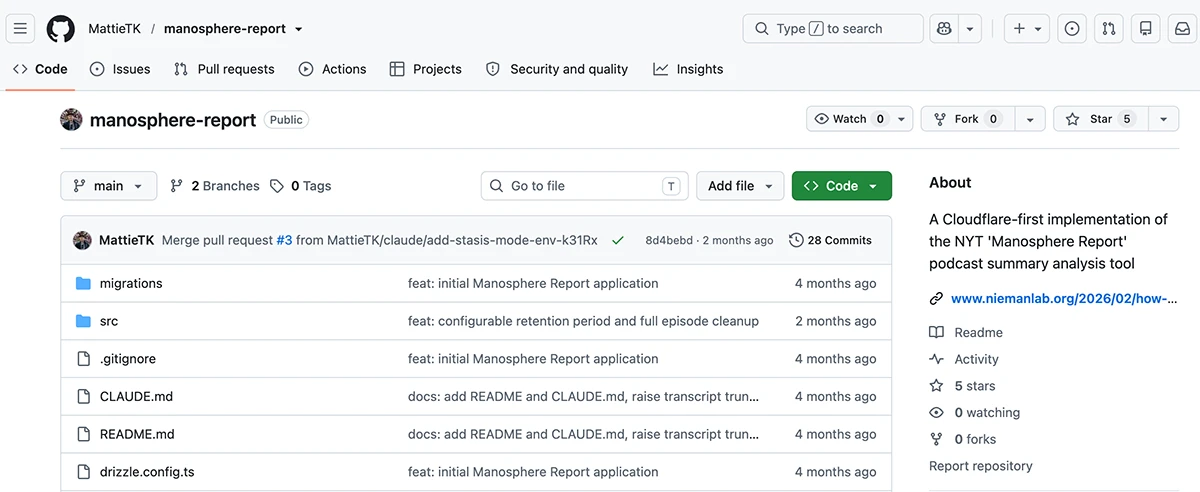
The report shared how it's helping to provide fast, clear signals about how influencers are reacting to certain government policy changes, and more.
Because of its success, they're now looking into other categories where this monitoring process makes sense to implement.
The initiative is seen internally as a way to amplify their investigative prowess, rather than actually having AI create new content itself.
MakeMyTrip's AI Assistant Myra handles 80,000 conversations daily (and is boosting conversions)
Just last month, travel platform MakeMyTrip revealed that its AI assistant, Myra, is handling more than 80,000 conversations per day.
That's an increase from 50,000 conversations daily in the prior quarter.
Co-founder and CEO Rajesh Magow said that users who interact with Myra across discovery, support, and booking stages have a 10% higher conversion rate than those using "traditional filter-led journeys."
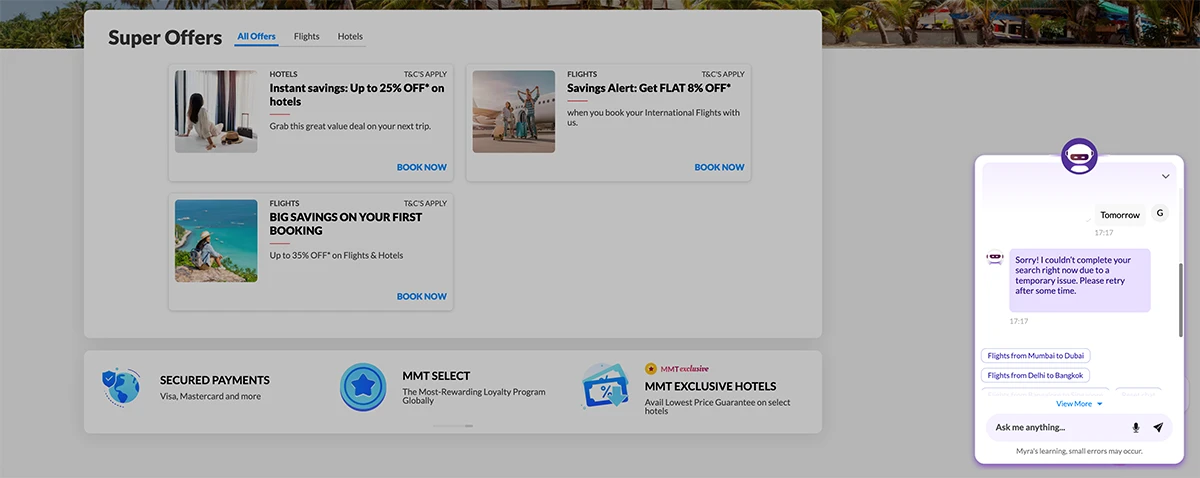
Myra is available to all site visitors and can assist with specific flights you're looking to book or with any general questions.
In my own testing, it's clear Myra still has some kinks to work out.
After choosing a flight, Myra asked me for dates to choose from, but the only options to click on were other flight destinations. When I suggested traveling tomorrow, Myra said it was having a temporary issue.
Publisher Mediahuis is experimenting with a 7-agent workflow for news reporting
Press Gazette's Charlotte Tobitt recently shared details on Mediahuis' new AI workflow, set to be used by their 2,000 journalists.
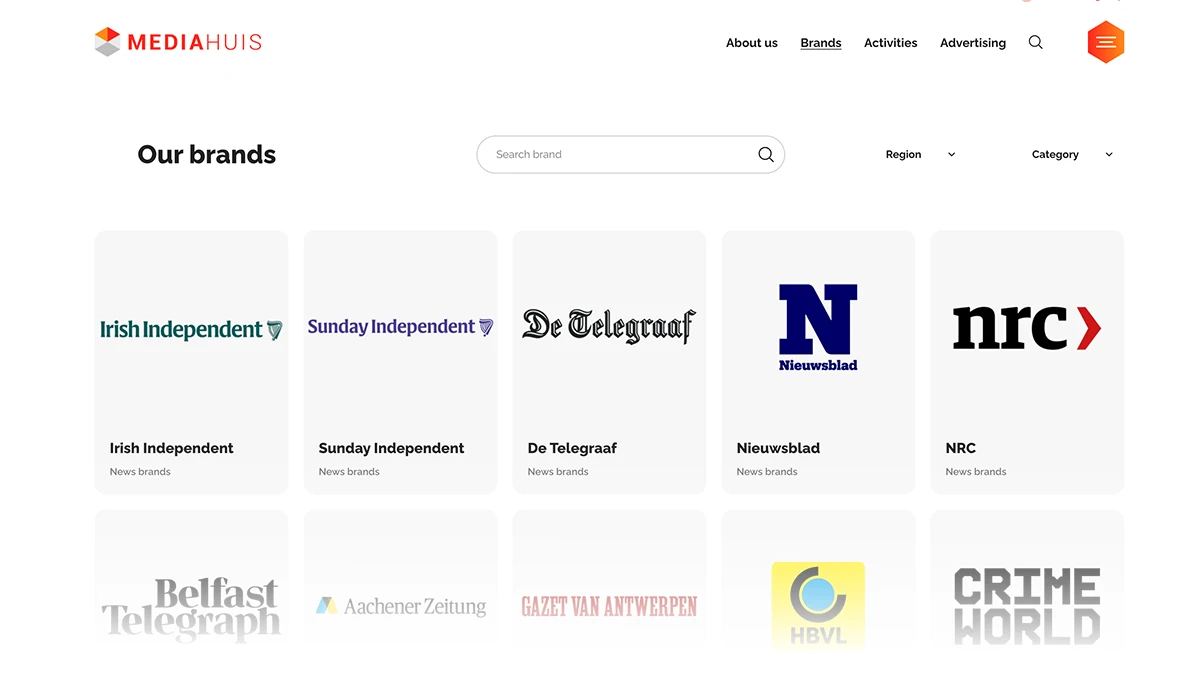
The company, which publishes around 25 titles across Europe, plans to use the following process:
- Agent #1: Ingests and scores events in real time
- Agent #2: Selects stories based on factors like historical performance
- Agent #3: Creates a 300-400 word story
- Agent #4: Finds relevant images and videos to include
- Agent #5: Ensures legal compliance
- Agent #6: Fact-checks the story
- Agent #7: Follows the news and updates the content if additional information emerges
If this is interesting, I recommend reading the full story, which includes additional quotes and insights.
Patch's AI-curated newsletters have almost 1M subscribers
Patch, which covers local news for hyperlocal communities, now has nearly one million subscribers to its AI-curated newsletters.
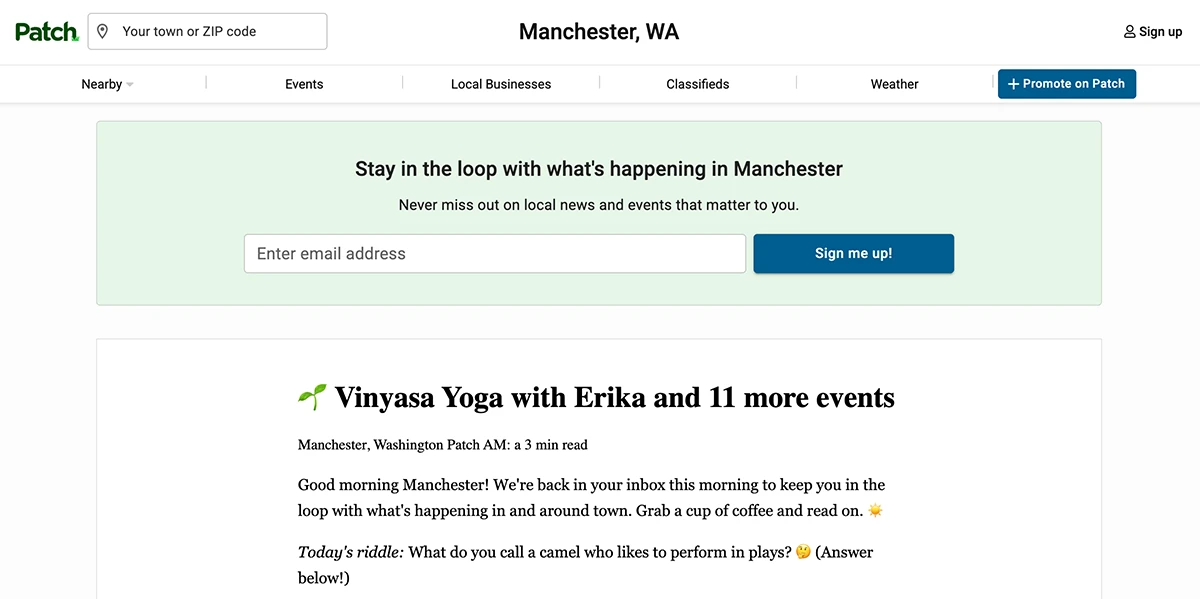
Dubbed PatchAM, it's especially valuable in areas with few to no local news alternatives.
AI's job is to sift through relevant sources, such as Nextdoor and school newspapers, to find stories worth sharing.
They state that the AI is constantly trained to make sure only "the most relevant, trustworthy news" is sent out. These newsletters are then monetized with advertising, featuring companies such as T-Mobile.
As CEO Warren St. John shared with CJR, "This is not the high church of journalism. This is about creating a foothold in a relationship and meeting a need".
Cars.com's AI-powered search, Carson, is converting users at a nearly 30% higher rate
In an investor update at the end of 2025, Cars.com revealed the conversion increases they're seeing from their AI-powered search assistant, Carson.
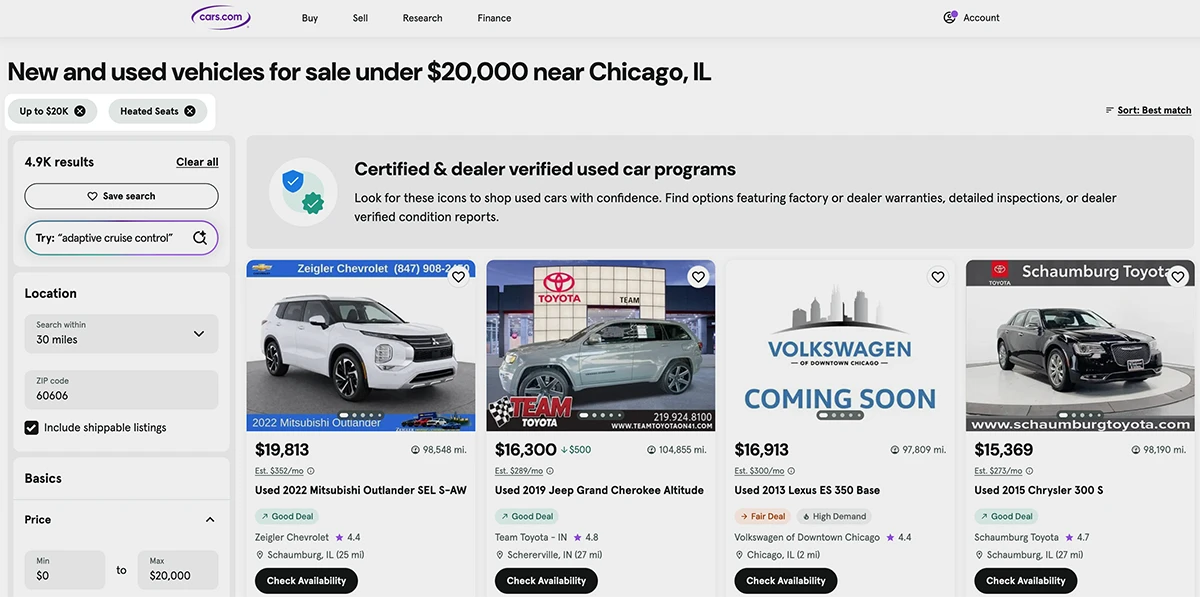
Specifically, they shared that:
- Carson assists with ~15% of web and mobile searches on the site
- Customers using Carson return to the site 2x more than other shoppers
- Carson users save 3x more vehicles
- They convert at a nearly 30% higher rate from search results to vehicle detail pages.
Carson supports more natural searches, such as "good first car for a teen driver" and "cars with heated seats under $20,000".
One really nice touch is that it automatically applies traditional filters relevant to your initial query, so you don't have to use Carson for follow-up questions.
Louise Linehan built a tool to find trending keywords right as they're taking off
The Ahrefs blog team recently ran a hackathon where everyone was encouraged to automate whatever part of their role they "find most painful."
Using Letaido, an Ahrefs-owned platform, Louise Linehan built a tool to help her identify trending topics worth writing about.
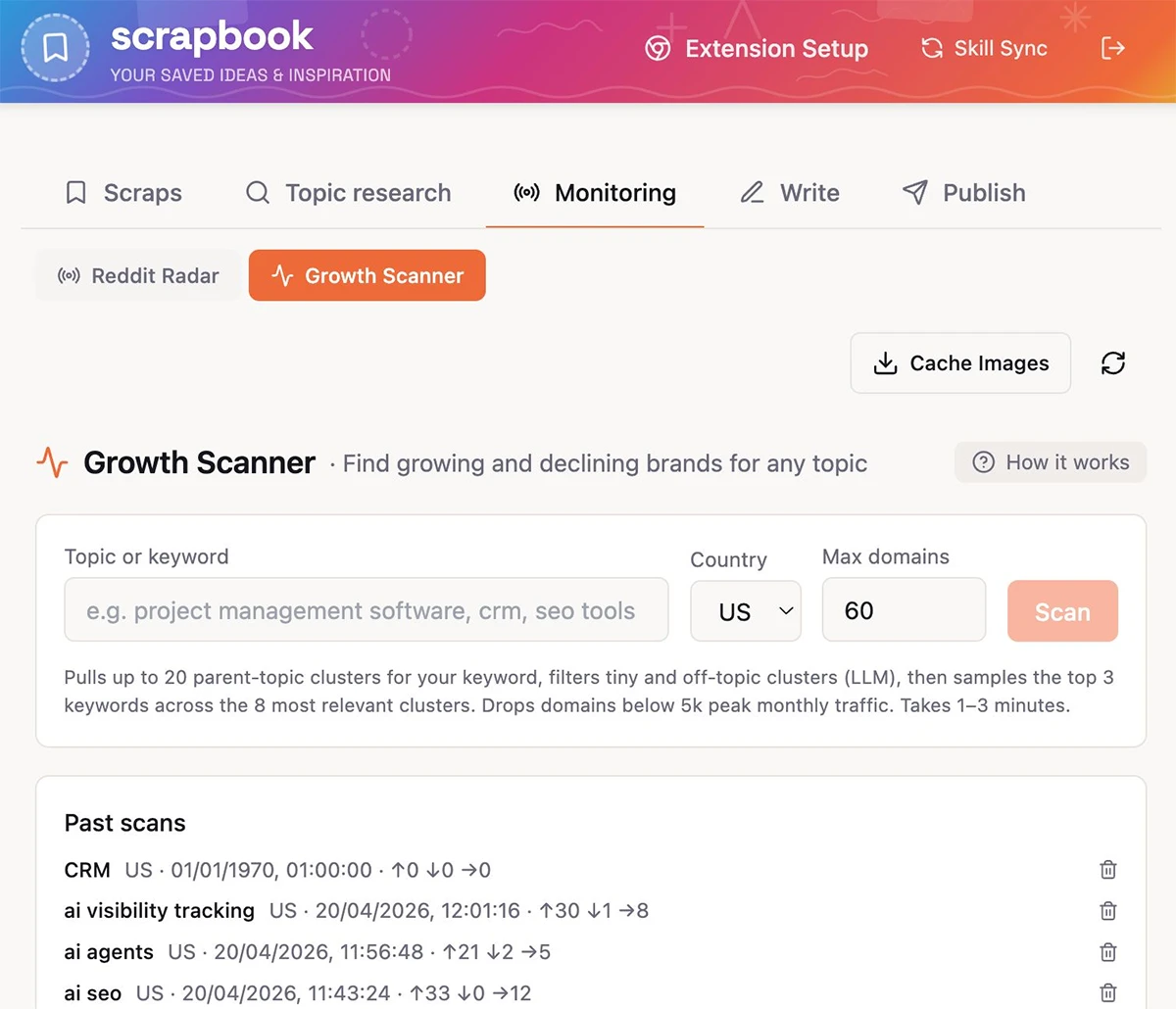
She initially provided seed topics, then set the system to run daily to find anything new.
Her custom dashboard shows how those terms have trended over the past 3, 6, and 12 months. It also checks whether Ahrefs already ranks for the phrase (in which case it's generally better to ignore the term or update the existing article).
While the idea of finding trending keywords isn't new, having a private dashboard check for you daily — without needing any programming skills — is a great testament to what's now possible.
QuickBooks uses AI to tailor their onboarding process to the business category you're in
Speaking at the 54th Nasdaq & Jefferies Investor Conference, Intuit CFO Sandeep Aujla shared insights into what AI is now enabling for the QuickBooks brand.
During the onboarding process, as soon as QuickBooks learns what type of business you're in, it can tailor the following steps specifically to your business.
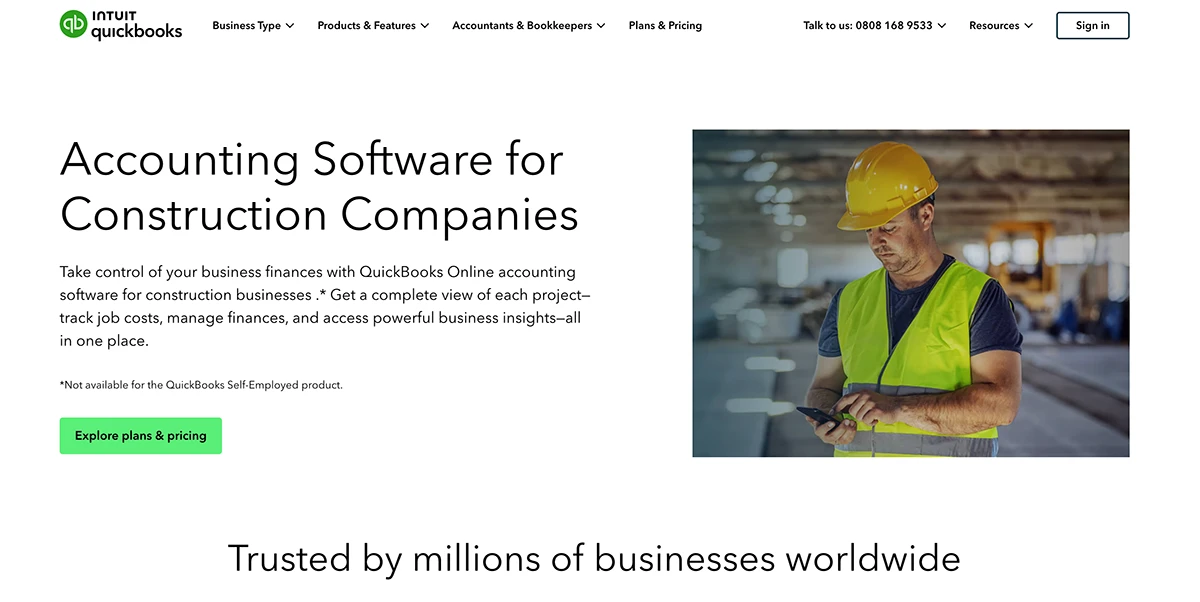
One example they gave was that of plumbers.
Because they've already served tens of thousands of plumbers, they know what KPIs matter to that customer and can highlight them prominently.
The key insight is that it makes QuickBooks feel like it was built specifically for them.
I see a lot of potential here for other SaaS businesses to follow suit.
Shopify's Sidekick is not just a chatbot. Users created 12,000 apps with it in a single quarter
If you've logged into a Shopify account recently, you'll have no doubt seen the company's AI assistant, Sidekick, front and center.
Everything points to users finding it valuable, with the number of weekly active shops using Sidekick up 4X year over year.
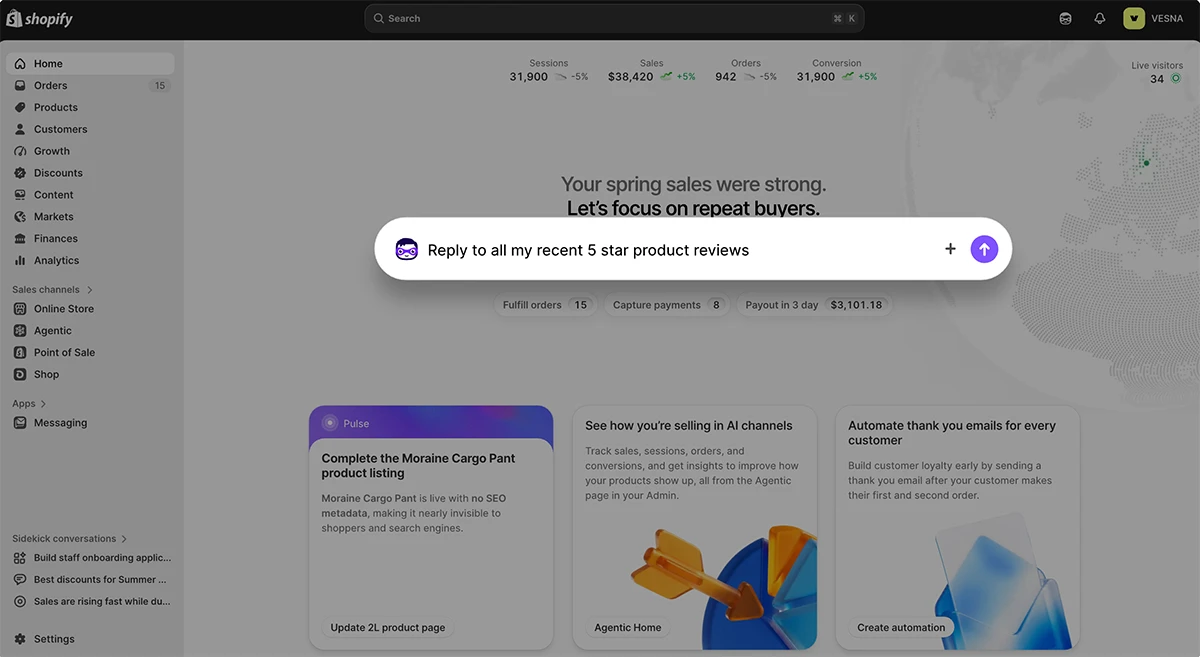
Shopify also revealed that over 12,000 custom apps were created with Sidekick in Q1 of 2026.
They added that Sidekick was used to generate almost half of all Shopify flows, and it's responsible for "multimillions" of theme edits — up 1,000% in a single quarter.
It's hard not to imagine that the more users can achieve with the platform they're already on, the less likely they are to look for a competing solution.
Stitch Fix saw a 100% lift in spend from its AI-powered "see it on me" feature
In October 2025, online styling service Stitch Fix introduced Vision, a feature that lets customers see how an outfit might look before they click Buy.
In June of 2026, Stitch Fix announced plans to roll it out to more customers, as the initial release had been such a huge success.
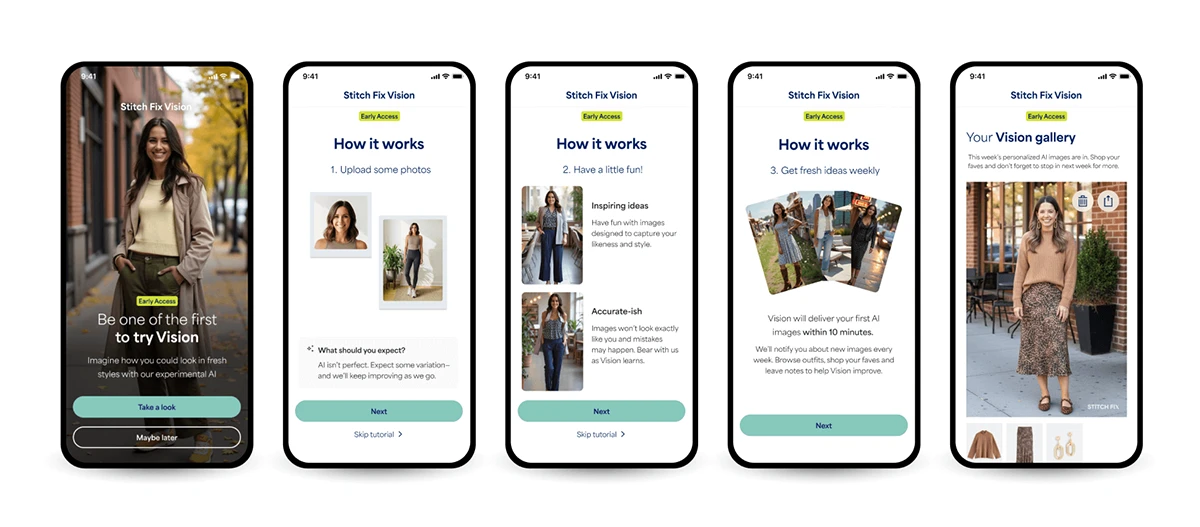
Over 90 days, customers who used Vision's "see it on me" functionality generated more than a 100% lift in Freestyle spend.
(Freestyle is different in that it allows customers to choose their own items, rather than those that have been curated for them.)
CEO Matt Baer says Stitch Fix has access to billions of data points about customers, such as budgets and style preferences, which help improve its AI-powered features.
Thanks to AI-powered search, Bloomberg saw news CTR on mobile nearly double
Bloomberg Media CTO William Anderson recently shared behind-the-scenes updates on how the company's new search functionality has impacted user journeys.
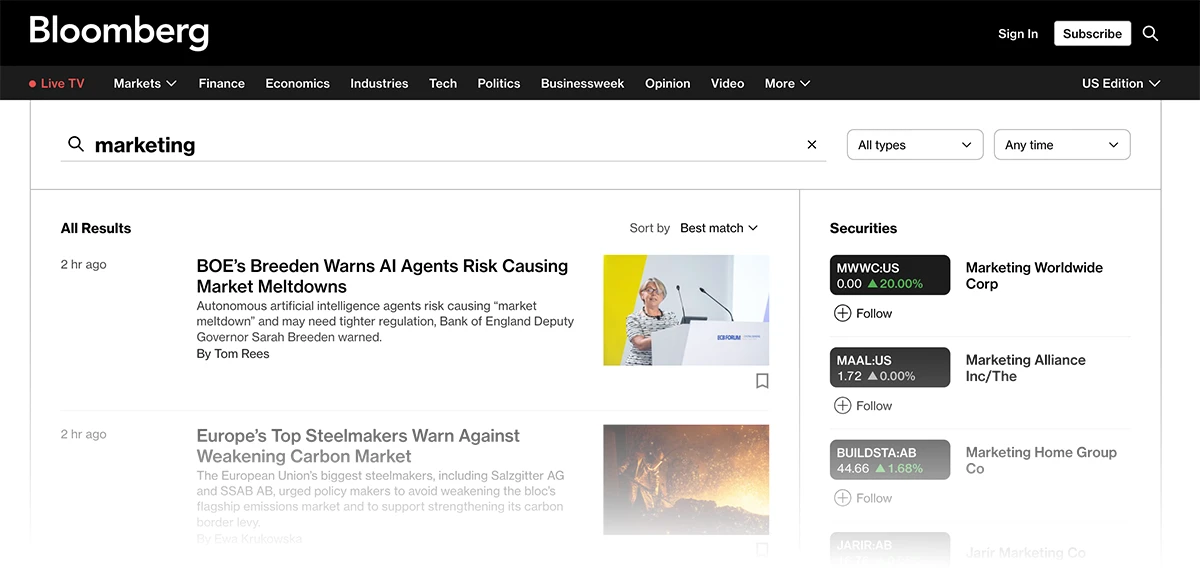
While my graphic represents Bloomberg.com, it's possible this functionality was enabled elsewhere or only on certain devices. I reached out to William a couple of days ago to get clarity.
Specifically, they found:
- 15% CTR increase just from AI-powered relevance improvements
- 15% improvement in the average clicked position
- A 21% drop in "load more" clicks
- News CTR on mobile went from 22.7% to 43.9%
- Subscribers now make 2.9x more searches
Bloomberg was methodical about their approach, with a simple goal to get readers to the right story, quickly. As Anderson put it,
We rebuilt search with AI at its core — hybrid semantic and keyword matching, a modular redesign, a mobile-native overhaul across web and app. Shipped over six months through disciplined, compounding experimentation.
Testing it for myself, it's interesting how search functionality is happy to pull up much older content (I saw results from 2012) if it thinks it's the best fit.
I personally didn't find the matching to be very accurate, even with more specific searches than the one in my graphic above, but it sounds like the overall results are hard to dismiss.
The Financial Times uses AI to tag archived content and better understand user interests
There was another fascinating insight from a previously mentioned Press Gazette article I had to share: The Financial Times uses AI to tag archival content to better understand what people are reading.
Adriana Whitely, director at FT Strategies, mentioned that AI is really good at labeling content — something journalists generally prefer not to do.
As Whitely put it:
..you can test different types of biases and different types of niche content or people, and you can do quite a lot more analysis to be able to identify those clusters and causes of your attraction.
Reading between the lines, I presume the tagging goes far beyond which category an article belongs to, but also covers any biases or strong opinions it might hold.
As I don't have their data (and it feels weird to mock up tagging their content), here's how the layers of tagging for articles on Ahrefs might look.
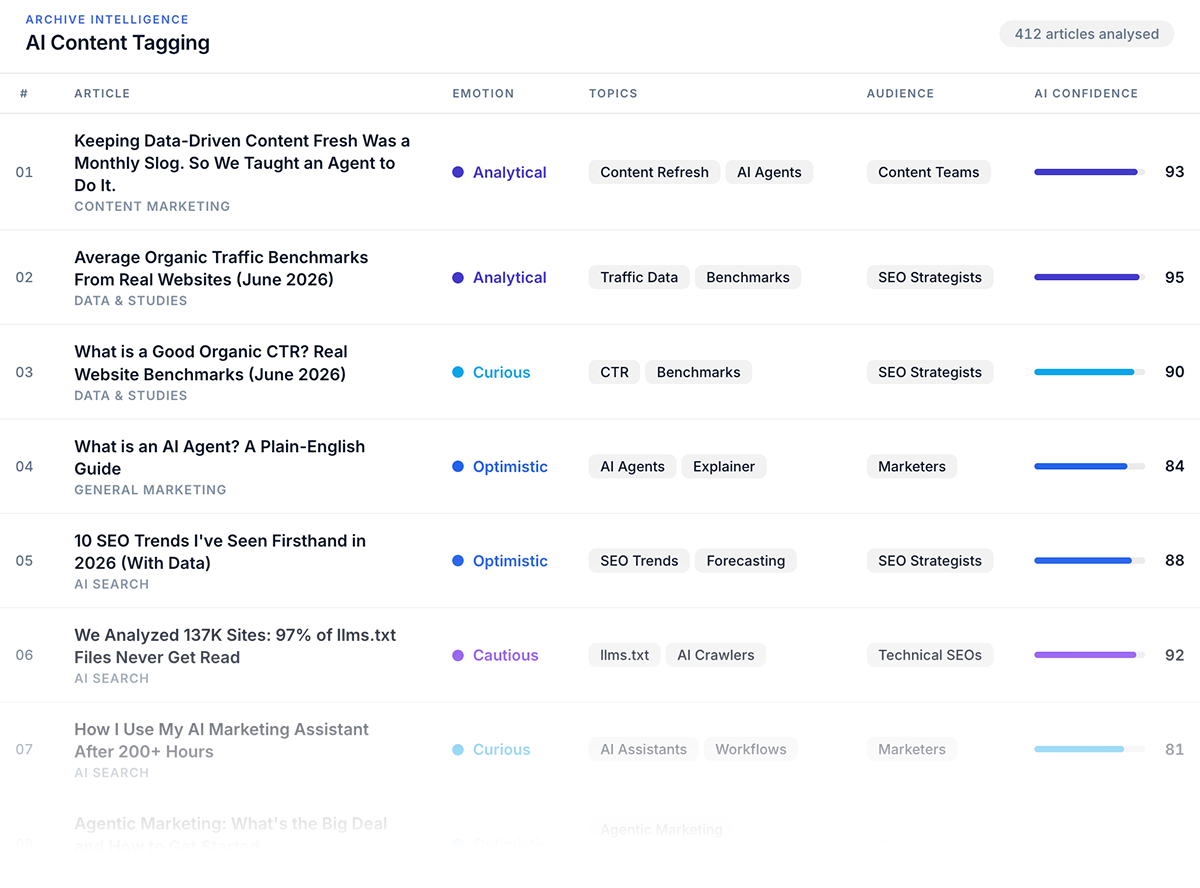
This work wouldn't be very useful on a site like Detailed, where we have fewer than ~200 pieces of content, but when you're publishing more than that daily, it makes a lot more sense.
Ahrefs' Ryan Law has a 23-skill-file process to help with Content Engineering
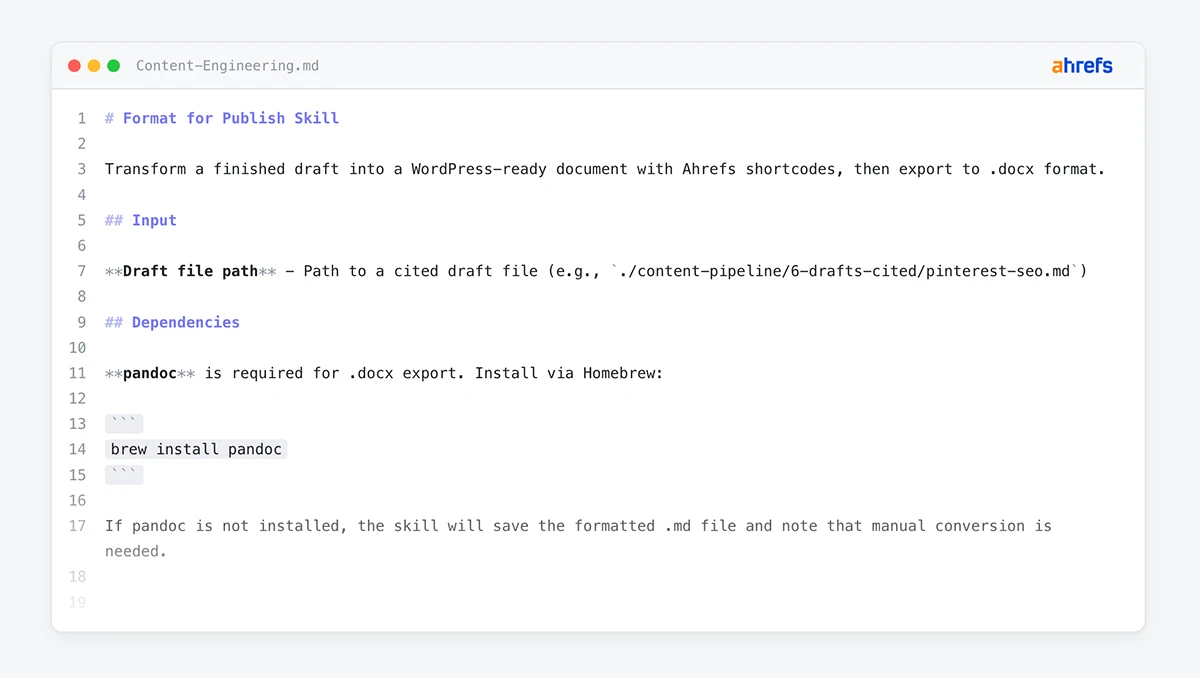
I've learned a lot from Ahrefs' Director of Content Marketing since I joined the company, and he even unknowingly inspired me to move Detailed to Astro, which I'm currently working on.
Ryan does not believe AI is a great fit for all content. Nor does he believe in using AI to scale content creation.
That said, he does see opportunities for it to help in certain workflows, which he recently covered in detail.
It's a topic a lot of people are interested in.
23 skill files make up his entire process, with each step reviewable before moving on to the next.
This AI-powered forum assistant increased posting rates for new users by 40%
VerticalScope is one of my favorite public companies to follow, as they're in the fairly unique position of being behind over 1,000 online discussion forums.
In 2025 they rolled out their AI-powered community assistant, Fora Frank.
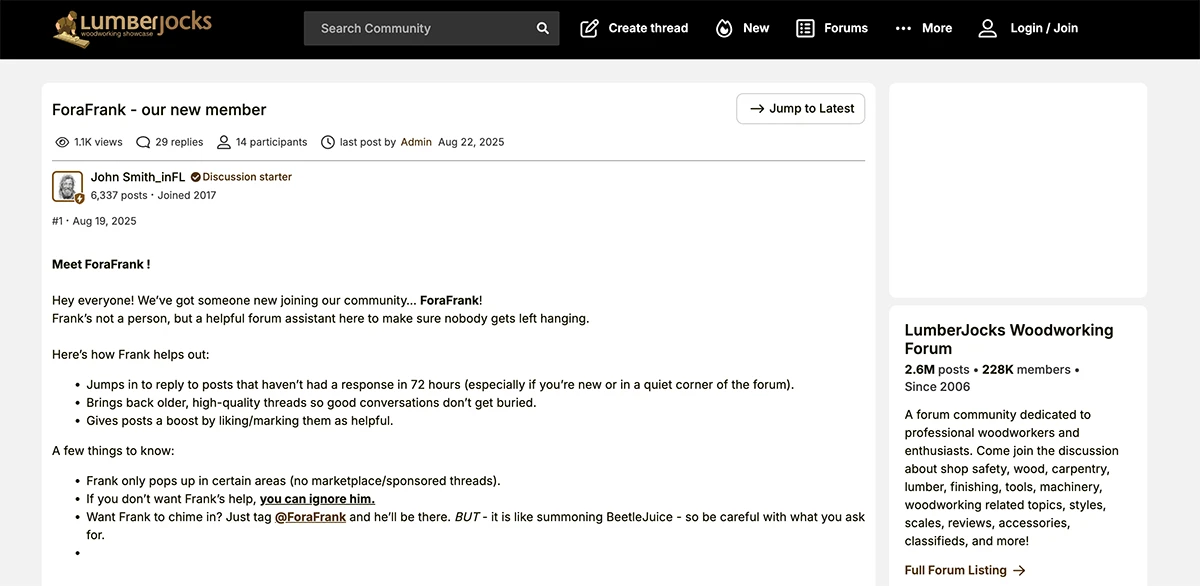
When making posts in a community, users can tag @ForaFrank to get specific insights, much like how people might tag @grok on X (Twitter).
As revealed by CEO Chris Goodridge, "we're seeing close to a 40% increase in posting rates for new users when they're received or apply from Fora Frank."
You can see ForaFrank being introduced to a community in the picture above.
Goodridge noted they're excited about the results and are exploring additional ways to use it to improve the quality of discussions on their sites.
ThredUp added AI-generated images to ~100K product pages
ThredUp, the online marketplace for secondhand clothes, added AI-generated images to over 100,000 product pages on its site.
CEO and co-founder James Reinhart said the AI model images had a "modest conversion impact" on existing customers.
For those new to purchasing secondhand items, however, he said the satisfaction it had generated has been "on par with our very best features".
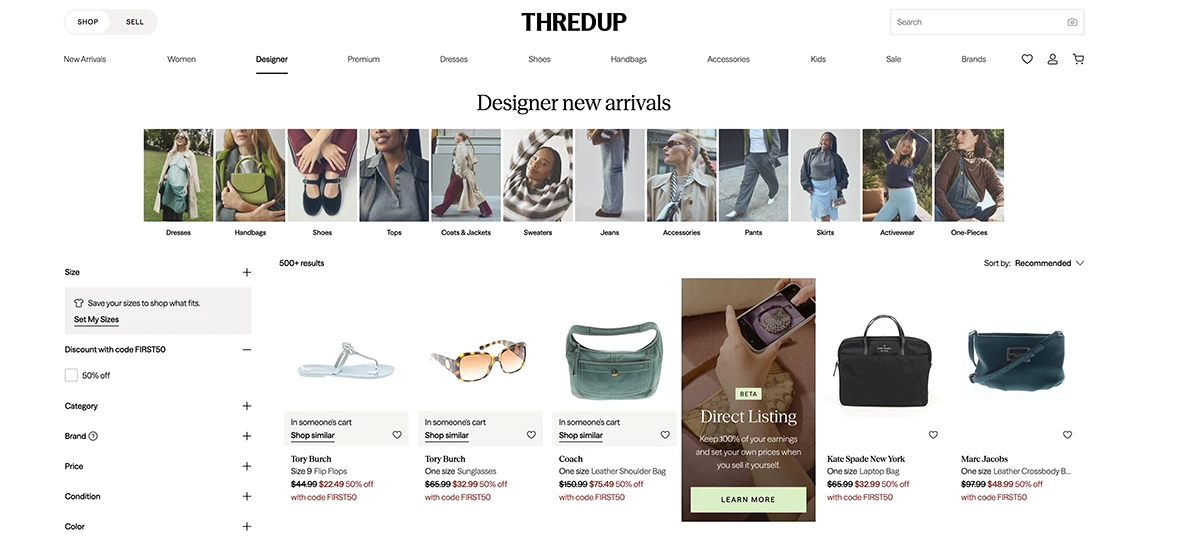
Online searches reveal criticism of the feature, with customers saying the AI-generated images sometimes alter the items' actual design.
Other comments by Reinhart clarified that they have further improvements to their quality before rolling the images out further, which suggests they aren't going away.
TIME launched an AI agent on its site. 7 months later, it still greets users on every article
In late 2025, TIME shared details about its goals with its new agent, TIME AI.
The aim was to increase users' engagement with the site, while appealing to new audiences who prefer to consume content in multiple ways.
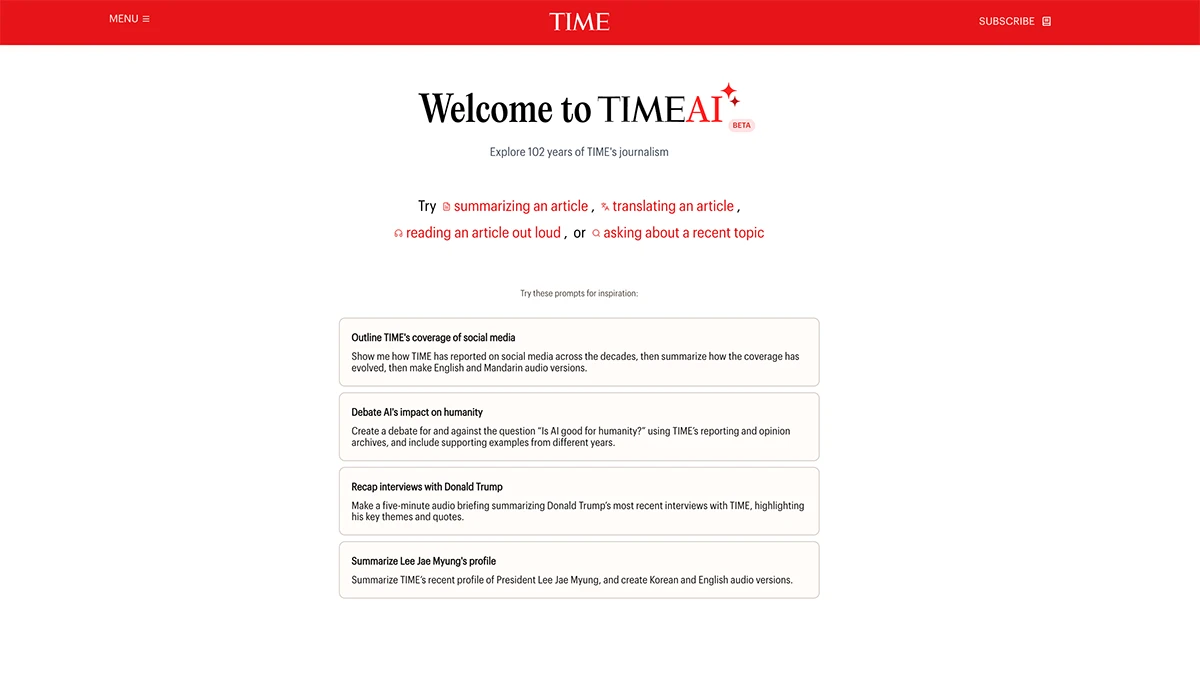
The four key features the agent aims to help with are:
- Summarizing articles
- Translating articles
- Reading articles out loud
- Letting users ask about recent topics
While I unfortunately don't have any information on how it's performing so far, it's encouraging that 7 months later, the feature is still prominently placed on every single article on their site.
It may be that they have a contract with the tech provider (Scale AI) to keep it in place, but given it was their third launch together, it suggests they're happy with how things are going.
It seems to be quite strict about what it allows you to discuss, even if TIME has previously written about that topic, but with a bit of prodding, you can usually get what you were looking for.
Yelp has reported success with real-time AI coaching for sales reps and managers
Yelp CEO David Schwarzbach recently revealed the company has built internal tools to help coach its sales reps.
AI can listen and provide insights in real time, or right after a call, regarding which Schwarzbach added, "We're having real success with that."
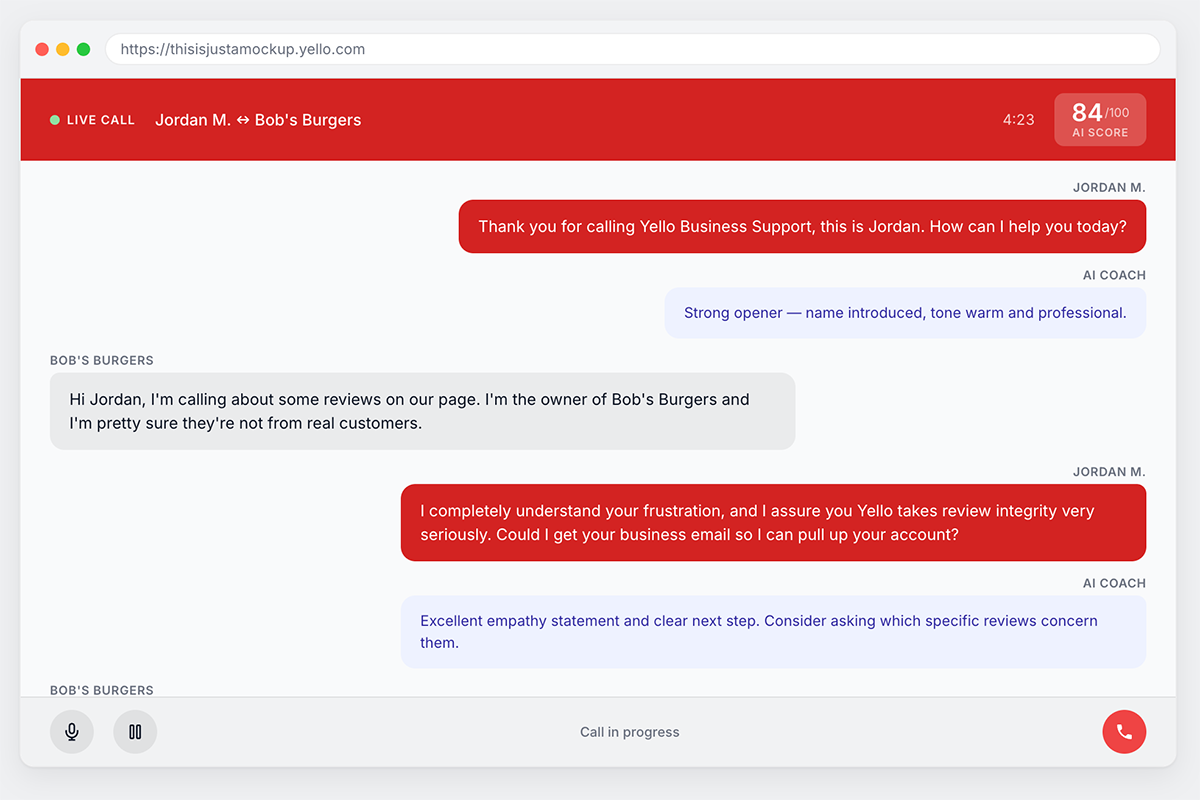
Another benefit is that managers can gain insights into how conversations are going, which they can then use to improve the feedback they pass on.
While this isn't relevant to the line of work I'm personally involved in, I can see the benefit of getting that immediate feedback to improve the calls team members are having.
Using AI for design, ad, and funnel testing, LendingTree increased conversions 17%
LendingTree, the publicly listed online lending marketplace, revealed that its AI use case primarily focuses on improving conversions.
In March of 2026 they revealed that their AI-enabled technology, used by their marketing team, increased their overall conversions by 17% year-over-year.
While they didn't reveal any specifics about the changes, there may be some insights in their recently redesigned homepage.
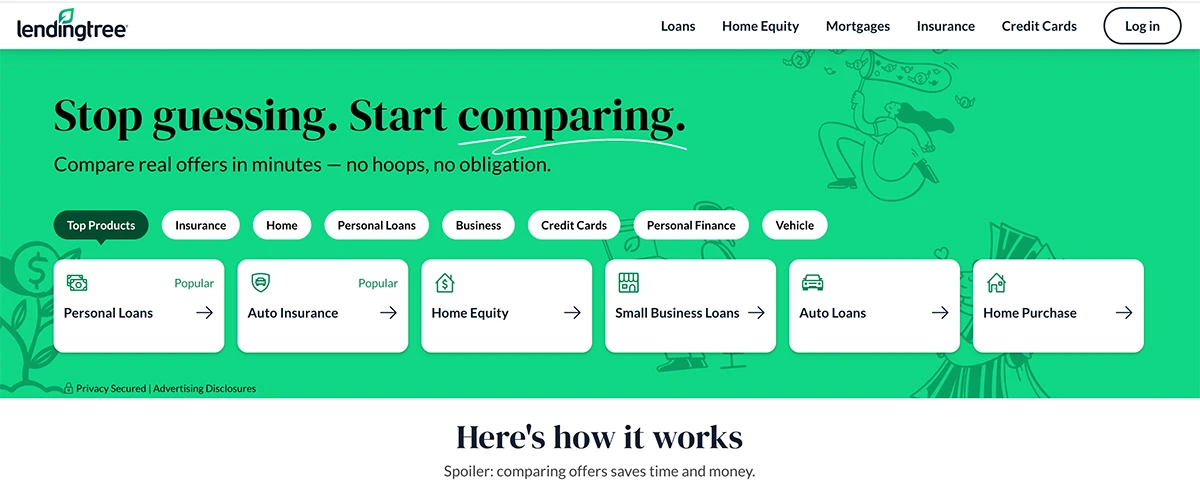
Launched in Q1 2026, they said they've been pleasantly surprised by the conversion uplift it has driven.
The change? They transitioned from "an SEO/lead-gen-oriented homepage to a branded one with valuable consumer information."
Xero's AI content engine took its output from 60 articles per quarter to 50 per day
Xero CEO Sukhinder Cassidy recently revealed that the company's AI-powered content engine has increased their output by around 80x.
It enabled Xero to scale "from roughly 60 SEO content pieces per quarter to 50 pieces per day". She added the approach has "lifted U.S. search visibility from minimal exposure to good to great."
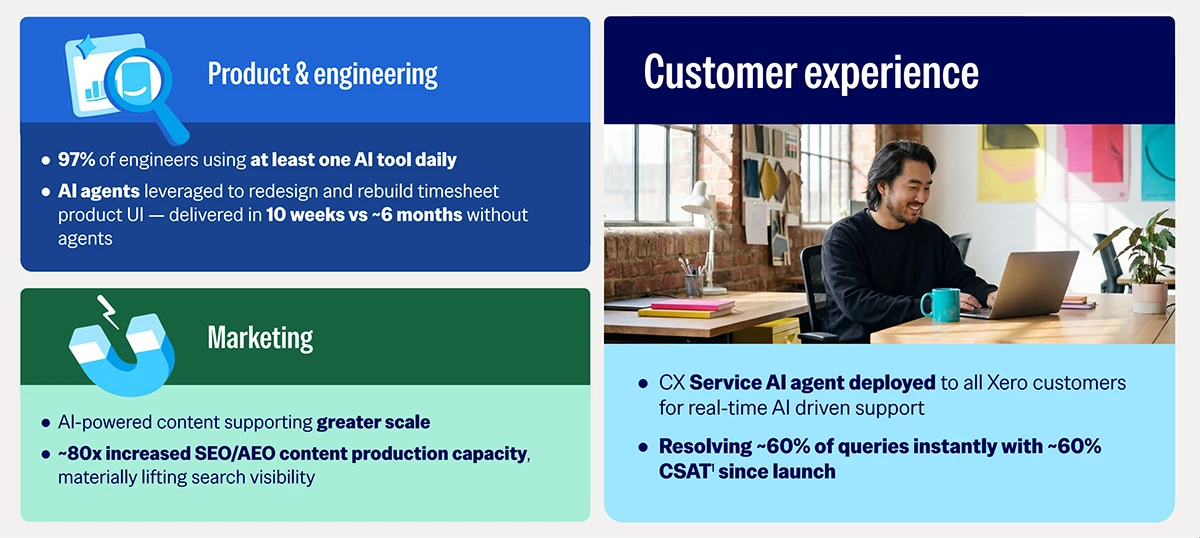
It should be noted that edits to existing articles likely account for a significant share of these increases.
It's not my place to comment on what Xero is doing, especially as I can only speculate which articles were written or edited in this way.
That said, anyone considering scaling content with AI would be wise to consult a professional before getting started.
You made it this far! If you would like to see a second edition, I would love your thoughts
Thank you for making it to the end of a report I've wanted to write for a very long time.
I think there's the potential to put together a new edition a few times each year, but I first need to make sure there's enough interest.
(I truly enjoyed writing it, but it takes a bit more time than I would like to admit.)
I always feel awkward about asking, but any shares, comments, or 'Likes' on LinkedIn and X would be much appreciated.
I have a few other reports in the works, so stay tuned for some updates there.
Thank you!